2026-06-04
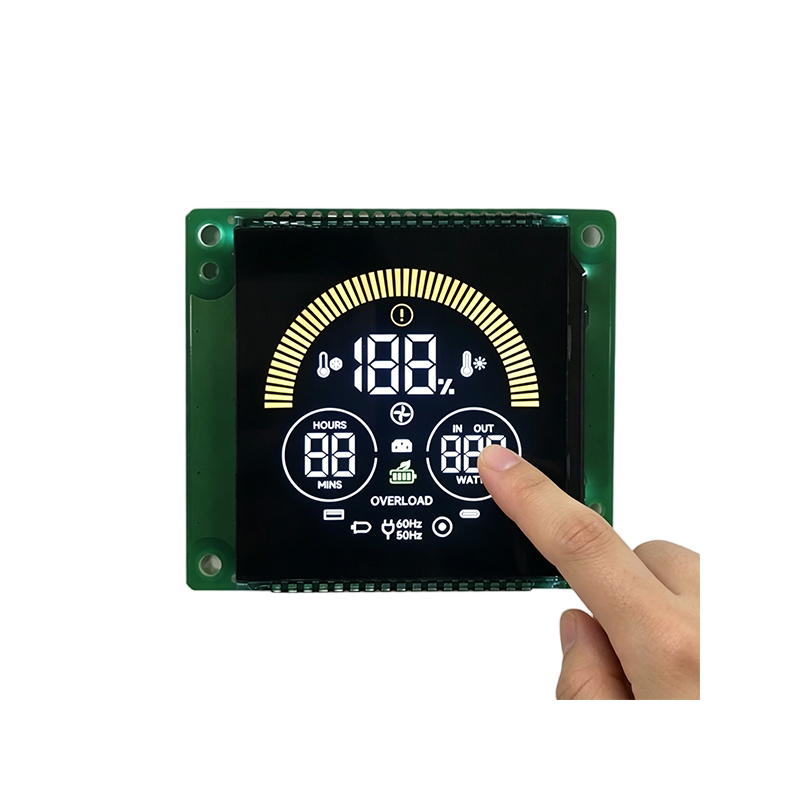
A multi segment display is an electronic component designed to show alphanumeric characters and symbols by illuminating specific segments within a single package. Widely used in industrial control panels, consumer appliances, and automotive dashboards, these displays offer a reliable balance between readability, cost-efficiency, and power consumption. Unlike complex dot-matrix screens, a multi segment display utilizes a fixed arrangement of bars—typically seven, fourteen, or sixteen—to form recognizable digits and letters, making them the industry standard for clear status indication.
The fundamental operation of a multi segment display relies on the precise activation of individual light-emitting elements arranged in a geometric pattern. Each element, known as a segment, can be turned on or off independently to create various characters. While the seven-segment configuration is the most ubiquitous, specialized applications often require higher density arrangements to render full alphabets or specific technical symbols.
At the core of this technology lies the method of light generation. Historically, incandescent filaments were used, but modern implementations almost exclusively utilize Light Emitting Diodes (LEDs) or Liquid Crystal Displays (LCDs). In an LED-based unit, each segment contains a semiconductor diode that emits light when current flows through it. Conversely, LCD versions manipulate liquid crystals to block or allow light from a backlight to pass through, creating visible characters with significantly lower power draw.
The internal architecture connects these segments to external pins via a common terminal. This terminal acts as the electrical reference point, either connecting to the positive voltage supply (Common Anode) or the ground (Common Cathode). By applying voltage to specific segment pins relative to the common terminal, the controller dictates which parts of the number or letter illuminate. This binary control system allows microcontrollers to drive complex information using minimal I/O lines through multiplexing techniques.
Early electronic devices were limited to displaying numbers 0 through 9. As user interfaces evolved, the need to display error codes, status messages like “ON” or “OFF,” and hexadecimal values became critical. This demand drove the development of multi-segment configurations beyond the basic seven-segment layout.
Engineers expanded the segment count to include diagonal bars and additional vertical sections. A fourteen-segment display adds diagonals and a central horizontal bar, enabling the distinct formation of all uppercase and lowercase letters. For even greater fidelity, sixteen-segment displays split the vertical bars into upper and lower halves, allowing for smoother curves and more legible typography. These advancements transformed the multi segment display from a simple counter into a versatile communication tool for embedded systems.
Selecting the right display technology is crucial for system performance. The market currently offers several distinct types, each optimized for specific environmental conditions and power constraints. Understanding the differences between LED, LCD, and VFD technologies helps engineers make informed design choices.
Light Emitting Diode (LED) displays remain the dominant choice for applications requiring high brightness and wide viewing angles. They are self-emissive, meaning they generate their own light without needing a separate backlight. This characteristic makes them ideal for outdoor equipment, automotive dashboards, and industrial machinery where ambient light levels vary drastically.
However, LED technology consumes more power than passive alternatives. In battery-operated devices, continuous illumination can drain energy reserves quickly unless aggressive power management strategies like dimming or sleep modes are implemented.
Liquid Crystal Display (LCD) technology is the preferred solution for portable, battery-powered devices. Unlike LEDs, standard LCD segments do not emit light; they modulate existing light. This passive nature results in exceptionally low power consumption, often allowing devices to run for years on a single coin cell battery.
Modern LCD modules often integrate a driver circuit and a backlight for low-light environments. While they lack the extreme brightness of LEDs, they excel in indoor settings such as thermostats, calculators, and medical instruments. The contrast ratio of LCDs has improved significantly, with negative display options (light text on dark background) gaining popularity for premium consumer electronics.
Although less common in new low-cost designs, Vacuum Fluorescent Displays hold a niche in high-end audio equipment and legacy industrial systems. VFDs offer a unique aesthetic with a warm, glowing appearance and excellent viewing angles. They bridge the gap between LEDs and LCDs, offering better brightness than LCDs and softer light than harsh LEDs.
The technology involves electrons emitted from a cathode striking phosphor-coated anodes (the segments). While they provide superior image quality, their requirement for higher voltages and larger physical footprints has led many designers to transition toward high-brightness LED alternatives in recent years.
The geometry of the segments defines the capability of the display. Choosing the correct configuration depends entirely on the data requirements of the application. A mismatch here can lead to unreadable error codes or increased firmware complexity.
The seven-segment layout is the simplest and most cost-effective option. Composed of three horizontal and four vertical bars, it perfectly forms digits 0-9. Some variants include a decimal point, effectively making it an eight-element device.
This configuration is sufficient for digital clocks, timers, and simple counters. However, its ability to render letters is limited. Characters like ‘K’, ‘M’, ‘W’, and ‘Z’ are either impossible to display or look ambiguous. Consequently, seven-segment units are rarely used for textual messaging beyond basic status indicators like “E” for error or “F” for full.
To overcome the alphabetical limitations of the seven-segment design, the fourteen-segment display introduces two diagonal bars and splits the middle horizontal bar. This addition creates an “X” shape and allows for the distinct rendering of the entire Latin alphabet.
This type is standard in devices that must display hex values (0-9, A-F) or short text messages. Microwave ovens, washing machines, and test equipment frequently utilize this format to show error codes like “dE1” or operational modes like “SPIN.” The clarity of characters like ‘R’, ‘B’, and ‘G’ is significantly improved compared to their seven-segment counterparts.
The sixteen-segment display takes refinement further by splitting the vertical segments into upper and lower halves. This allows for curved features, such as the bottom loop of a lowercase ‘g’ or the rounded top of a ‘U’.
While the visual improvement over the fourteen-segment version is subtle, it matters in applications demanding high legibility. Aviation instrumentation and high-end medical monitors often prefer this layout to ensure that critical information is misinterpreted under stress. The trade-off is a slight increase in pin count and driving complexity.
When engineering a product, selecting the underlying technology involves balancing brightness, power, and environmental resilience. The following table contrasts the primary characteristics of the major multi segment display technologies available in the current market.
| Feature | LED Display | LCD Display | VFD Display |
|---|---|---|---|
| Brightness | Very High (Self-emissive) | Moderate (Requires backlight) | High (Self-emissive) |
| Power Consumption | High | Very Low | Moderate to High |
| Viewing Angle | Excellent (>120°) | Limited (depends on tech) | Excellent |
| Operating Temp Range | Wide (-40°C to +85°C) | Narrower (Liquid crystal limits) | Wide |
| Response Time | Nanoseconds | Milliseconds | Microseconds |
| Typical Lifespan | 50,000+ hours | 50,000+ hours | 30,000+ hours |
| Cost Factor | Low to Medium | Low | High |
This comparison highlights why LEDs dominate industrial sectors where visibility is paramount, while LCDs rule the portable consumer market. VFDs remain a specialized choice for applications where their specific glow and viewability justify the higher cost and voltage requirements.
Integrating a multi segment display into an electronic system requires careful consideration of driving methods. Direct driving is feasible for single-digit displays, but multi-digit setups necessitate multiplexing to conserve microcontroller resources.
In static driving, each segment is connected directly to a dedicated output pin on the controller. The segment remains lit as long as the pin outputs the correct logic level. This method provides the highest brightness and stability since the duty cycle is 100%.
However, static driving scales poorly. A four-digit display with decimal points requires 36 individual pins (8 segments × 4 digits + 4 commons). Most microcontrollers do not have enough GPIO pins to support this approach for anything beyond a single digit. Therefore, static driving is typically reserved for simple indicator lights or very small displays.
Multiplexing is the industry-standard solution for driving multiple digits. Instead of lighting all digits simultaneously, the system illuminates them one by one at a rapid pace. By cycling through the digits faster than the human eye can perceive (typically above 60Hz), the display appears to be continuously lit.
Advanced driver ICs often handle the multiplexing logic internally, accepting serial data (like SPI or I2C) from the main processor. This offloads the refreshing burden from the CPU, allowing it to focus on other tasks while ensuring stable display performance.
The versatility of the multi segment display ensures its presence across diverse industries. Its ability to convey numerical data and short text clearly makes it indispensable in scenarios where screen real estate is limited but information clarity is non-negotiable.
In factory settings, machines must communicate status, error codes, and setpoints to operators instantly. Seven and fourteen-segment displays are mounted on PLCs, motor drives, and temperature controllers. Their robustness against electromagnetic interference (EMI) and ability to operate in high-vibration environments make them superior to fragile graphical screens in these harsh conditions.
Operators rely on these displays to diagnose faults quickly. A flashing “Err 5” on a conveyor belt controller can indicate a specific sensor failure, minimizing downtime. The high contrast of LED segments ensures visibility even in poorly lit warehouse aisles or under bright factory floodlights.
From washing machines to microwave ovens, home appliances utilize multi-segment displays to guide users through cycles. The trend here is shifting towards fourteen-segment displays to show descriptive words like “Rinse,” “Spin,” or “Defrost” rather than cryptic codes.
Energy efficiency is a key driver in this sector. Many modern appliances use reflective LCDs with front lighting to minimize power draw, aligning with global energy standards. The aesthetic integration of these displays into sleek plastic bezels also influences the choice of color and segment style.
While full digital clusters are becoming common, multi-segment displays remain vital in secondary automotive roles. They appear in radio frequency tuners, climate control panels, and trip computers. The requirement for extreme temperature tolerance (-40°C to +85°C) filters out many consumer-grade components, leaving only high-reliability LED and VFD options.
Safety regulations dictate that these displays must remain readable under direct sunlight without causing glare that distracts the driver. Automotive-grade LEDs are specifically binned for consistent color and intensity to meet these strict optical standards.
Portable medical equipment, such as glucometers, thermometers, and infusion pumps, depends heavily on low-power LCD multi-segment displays. Battery life is critical in life-supporting or monitoring devices. The clarity of the display directly impacts patient safety, necessitating high-contrast segments that are easy to read for users with varying visual acuity.
In these applications, custom mask LCDs are often produced to include specific icons alongside the numeric segments, providing context for measurements like heart rate symbols or battery status indicators.
Given the diverse requirements outlined above—from rugged industrial panels to delicate medical interfaces—the choice of manufacturing partner is as critical as the technology selection itself. Producing high-quality multi segment displays demands not only advanced equipment but also deep expertise in customization.
Dalian Eastern Display Co., Ltd. stands at the forefront of this industry, operating two state-of-the-art factories in Dalian and Dongguan. Equipped with professional production lines and refined industrial technology, the company specializes in the full-range production of monochrome LCD screens and modules. Their commitment goes beyond standard offerings; they excel in designing and producing customized solutions tailored to specific customer needs.
With a portfolio boasting over 10,000 unique products, Dalian Eastern Display has successfully delivered segment code, character dot matrix, graphic dot matrix LCD, and TFT displays to a global clientele. These components are widely deployed in the very sectors discussed earlier: home appliances, automotive electronics, medical equipment, and industrial instrumentation. As a qualified supplier for many well-known manufacturers, the company combines scale with precision, achieving an annual capacity of 50,000 square meters of LCD screens and 10 million LCD display modules and related electronic components. Whether clients require OEM or ODM services, the company’s infrastructure ensures that complex design concepts are translated into reliable, mass-producible reality.
Every technology involves trade-offs. Understanding the specific strengths and weaknesses of multi segment displays helps engineers decide when to use them versus when to opt for full graphic OLED or TFT screens.
Despite these limitations, for applications focused on displaying metrics, counts, and status codes, the multi segment display remains the optimal solution due to its simplicity and reliability.
The landscape of display technology is evolving, yet the multi segment display continues to adapt rather than disappear. Recent innovations focus on integrating smarter drivers, improving energy efficiency, and enhancing aesthetic flexibility.
One significant trend is the integration of touch capabilities. While traditionally passive, newer module designs incorporate capacitive touch sensors behind the segment layer, allowing users to interact directly with the display surface. This merges the simplicity of segment readouts with the interactivity of modern touch interfaces.
Furthermore, the push for miniaturization has led to chip-on-board (COB) segment displays. By mounting the LED die directly onto the PCB and covering it with a custom lens, manufacturers reduce the overall thickness and footprint of the assembly. This is particularly valuable in wearable technology and compact IoT devices where space is at a premium.
Industry experts also note a shift towards customizable color mixing. RGB LED segments allow a single display to change color based on status—green for normal operation, amber for warnings, and red for critical errors—without needing multiple physical displays. This dynamic feedback mechanism enhances user experience and safety.
The distinction lies in the electrical wiring of the LEDs. In a common anode display, all positive terminals of the LEDs are connected together; you light a segment by grounding its specific pin. In a common cathode display, all negative terminals are connected together; you light a segment by applying a positive voltage to its pin. Choosing the wrong type will prevent the display from functioning with your specific driver circuit.
Standard seven-segment displays cannot effectively show lowercase letters due to the lack of diagonal and split vertical segments. However, fourteen-segment and sixteen-segment displays are explicitly designed to render both uppercase and lowercase alphabets clearly, making them suitable for applications requiring text messaging.
Flickering occurs when the refresh rate drops below the human flicker fusion threshold, typically around 60Hz. To prevent this, ensure your microcontroller’s timer interrupt refreshes all digits at least 100 times per second. Additionally, verify that the duty cycle is balanced so that each digit receives equal illumination time.
Yes, particularly LED-based models. They offer high brightness levels that combat direct sunlight. When selecting a display for outdoor use, ensure it has an appropriate IP rating for water and dust resistance, and consider adding a sunshield or polarizing filter to enhance contrast further.
High-quality LED multi segment displays typically boast a lifespan exceeding 50,000 to 100,000 hours. This translates to over ten years of continuous operation. Failure usually results from gradual dimming rather than sudden burnout, provided the operating current stays within the manufacturer’s specified limits.
The multi segment display remains a cornerstone of human-machine interface design, offering an unmatched combination of clarity, durability, and cost-effectiveness. Whether utilizing a rugged LED array for industrial machinery or a power-sipping LCD for a handheld medical device, these components provide the essential link between digital data and human understanding.
For engineers and product designers, the choice ultimately depends on the specific constraints of the project. If brightness and outdoor visibility are paramount, LED technology with a fourteen-segment layout offers the best balance of readability and functionality. For battery-constrained portable devices, LCD solutions provide the necessary endurance. Applications requiring rich graphics should look elsewhere, but for displaying numbers, status codes, and short messages, no other technology matches the efficiency of the multi-segment approach.
Who should use this technology? It is ideal for developers of embedded systems, industrial controllers, consumer appliances, and automotive subsystems who need reliable, real-time data visualization without the complexity and cost of full graphical screens.
As you move forward with your design, evaluate your environmental conditions, power budget, and information density requirements. Selecting the right segment count and driving method early in the design phase will streamline your development process and ensure a robust final product. By leveraging the proven reliability of multi segment displays and partnering with experienced manufacturers capable of custom innovation, you can deliver user interfaces that are both intuitive and enduring.